This page is optimised for desktop viewing
·
This page is optimised for desktop viewing ·
Delivering an end-to-end digital lending experience
Role - Senior UX Designer @ Backbase
Platform - Web and App
Scope - An end-to-end loan origination experience
Team - PM, BA, User Research, Engineering-manager, Front-end, Back-end, QA
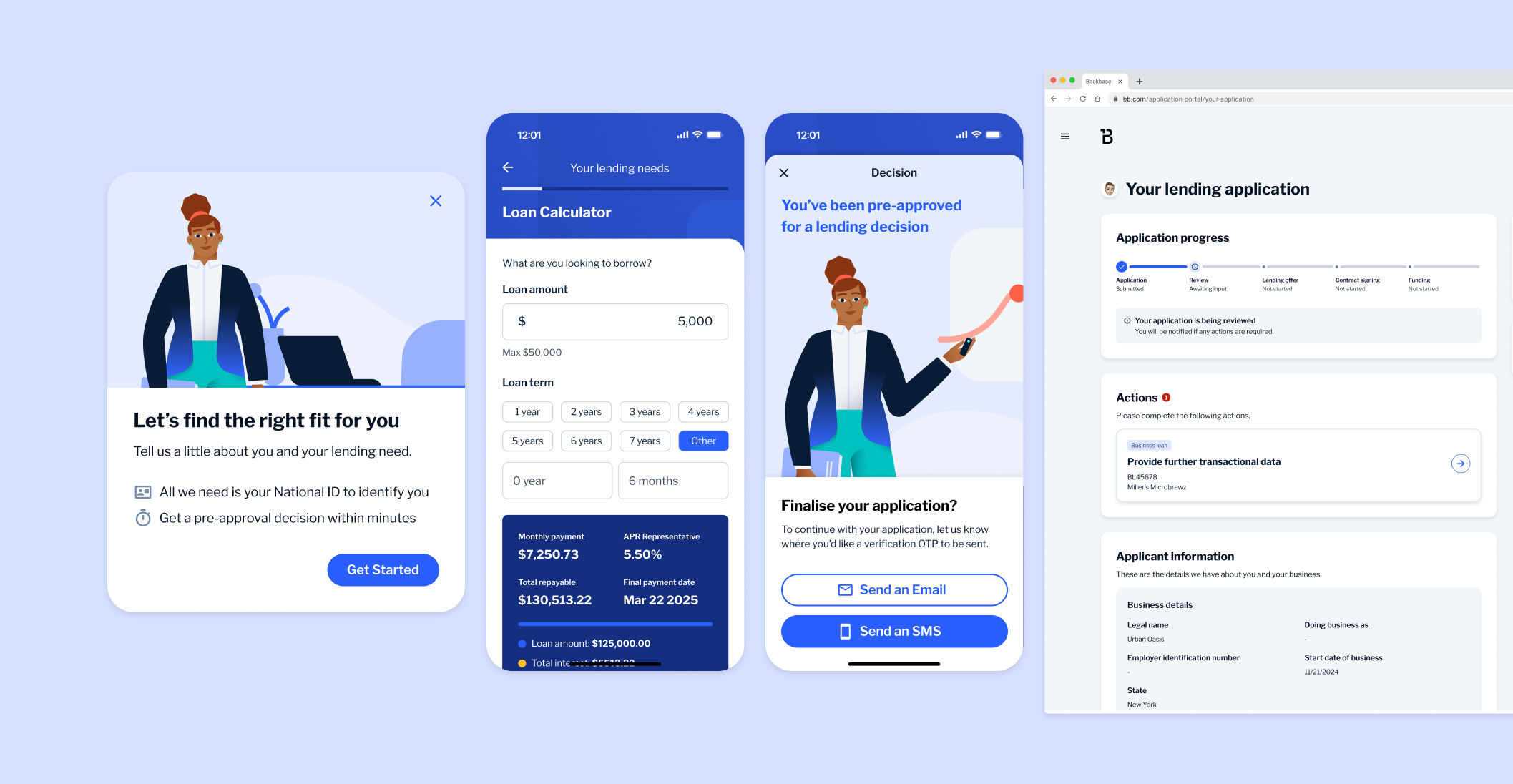
*View this image in more detail by clicking on it.
Summary
Backbase’s business-orchestration product, ‘FLOW’ has a strong foothold in the digital-onboarding space and wanted to capitalise on this momentum by entering the lending-origination space.
Recruited as a founding designer for a newly created ‘Digital Lending’ value-stream, I was tasked with getting a product-offering to market and then maturing the product into a credible, end-to-end product suite that translated complex orchestration logic into seamless user experiences that banks wanted to adopt as part of their digital-transformation project.
Opportunity
The initial goal was to quickly prove that the FLOW product could effectively position itself as a lending-origination product offering. After this was achieved, there was a key opportunity for design to influence and shape the roadmap with the key product stakeholders and prove that the design function was not just an engineering un-blocker, but a key product partner.
My role
The following content details the key points of my 3-year journey within the Digital Lending value-stream.
This design role was diverse and constantly utilised my following skills…
End-to-end design delivery - At the speed in which the value-stream wanted to move, I would regularly communicate high-level concepts with tech-leads to decipher what technical possibilities we could unlock before refining these concepts through to a lower-level detailed view that could effectively support engineering sprint activities.
Business intelligence - Aligning frequently with a business-analyst, I would enter conversations with high-level bank stakeholders to understand what they were trying to achieve with their lending experiences.
Discovery research - I partnered with the user-researcher to devise a robust research plan that would unlock a consistent thread of insights in to the usability of our product and help us understand what their current lending experiences looked like to inform our own experience mapping documentation.
High-level prototyping - Identifying 'snowflake' components and integrating them into our Figma and code libraries to ensure scalability.
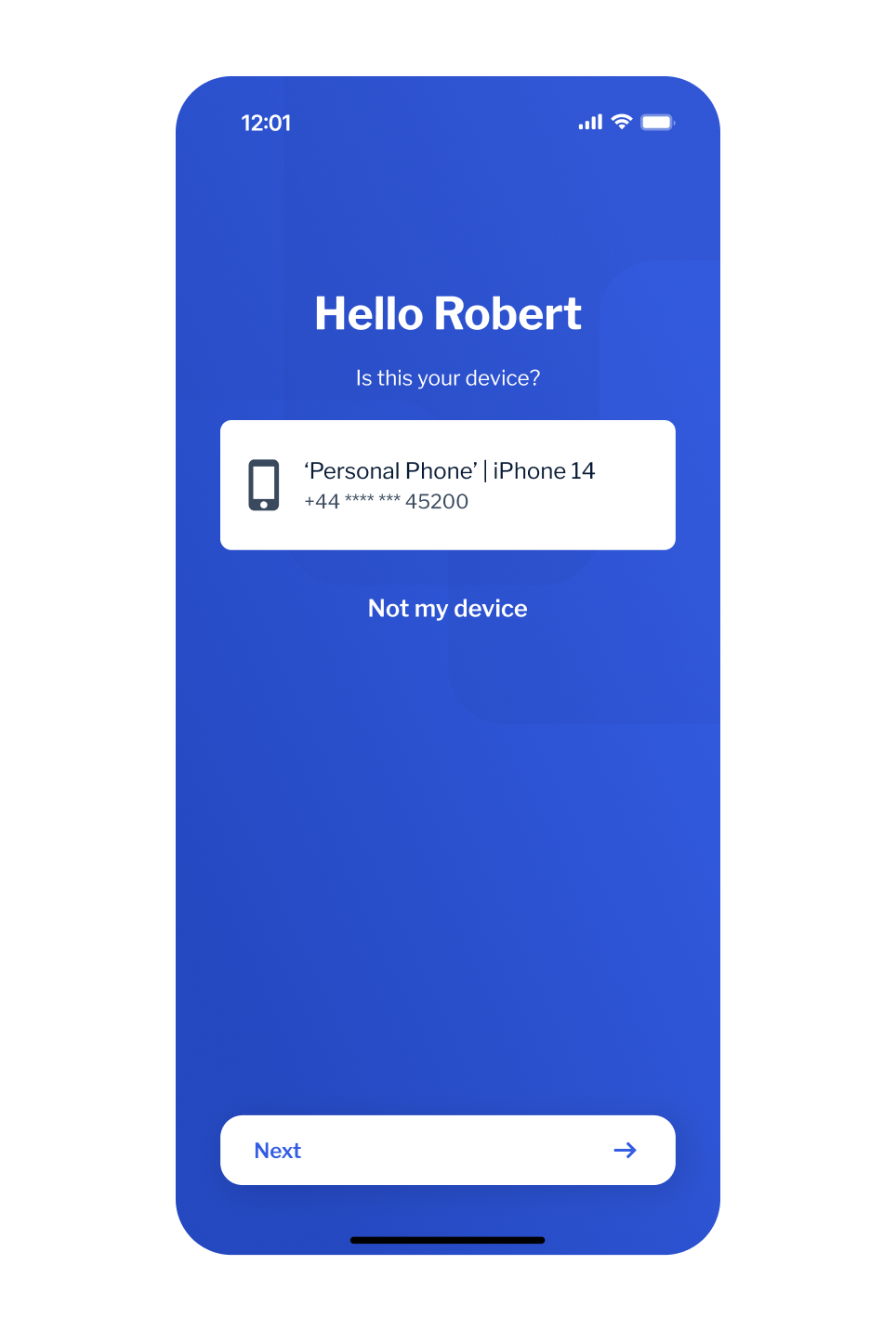
Recognising the unique challenges designing for mobile-native would bring, I championed for a discovery-first approach to move beyond a feature-parity mindset and prioritise end-user value (and trust).
Approach
Understanding the user
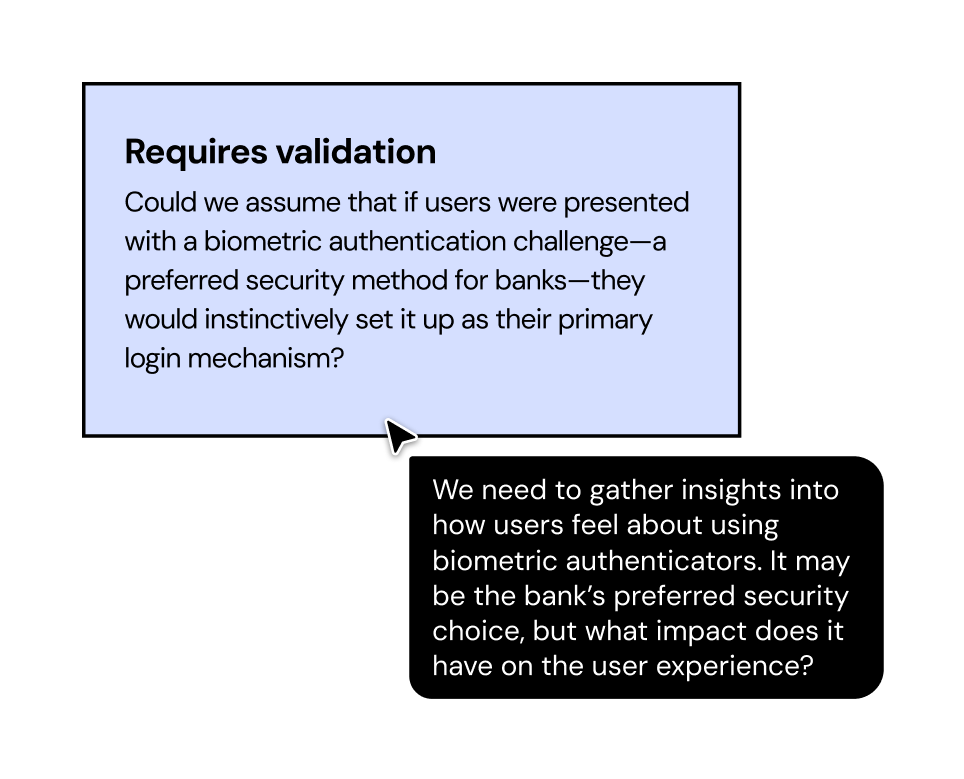
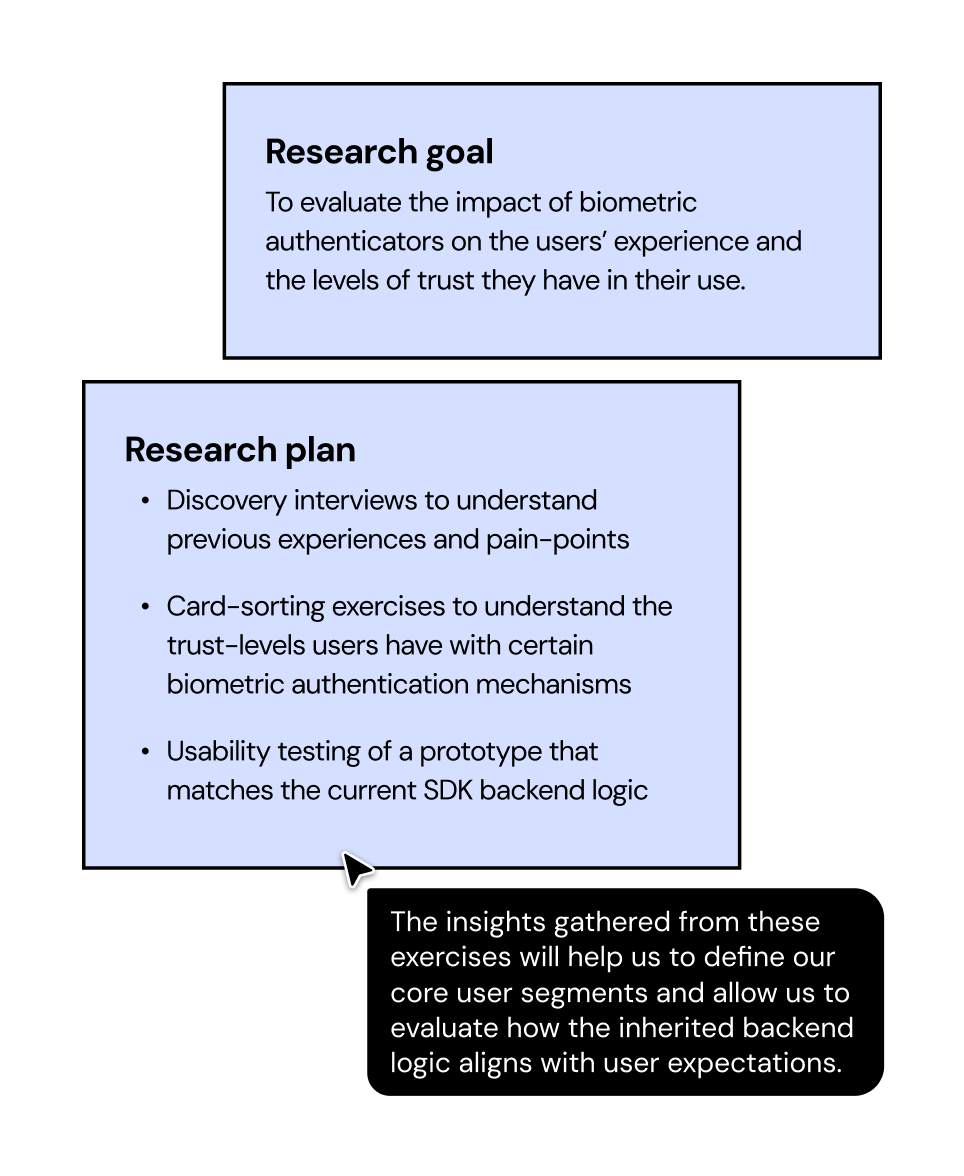
Operating without a dedicated researcher in the squad, I took ownership of the discovery phase. I designed and executed a research plan to analyse user security habits and evaluate trust levels in existing biometric authentication.
This research plan consisted of…
Discovery interviews - To uncover qualitative insights into user experiences and frustrations with biometric authentication.
Card sorting exercises - To map and categorise user trust levels with different security mechanisms within their personal digital habits.
Usability testing - Testing prototypes that mirrored the SDK logic to identify friction points and misalignments with user expectations.
Analysis and play-back
To ensure that these research activities held value and weren’t a blocker to planned project-timelines, I communicated key findings back to the product and engineering teams.
These key-findings were…
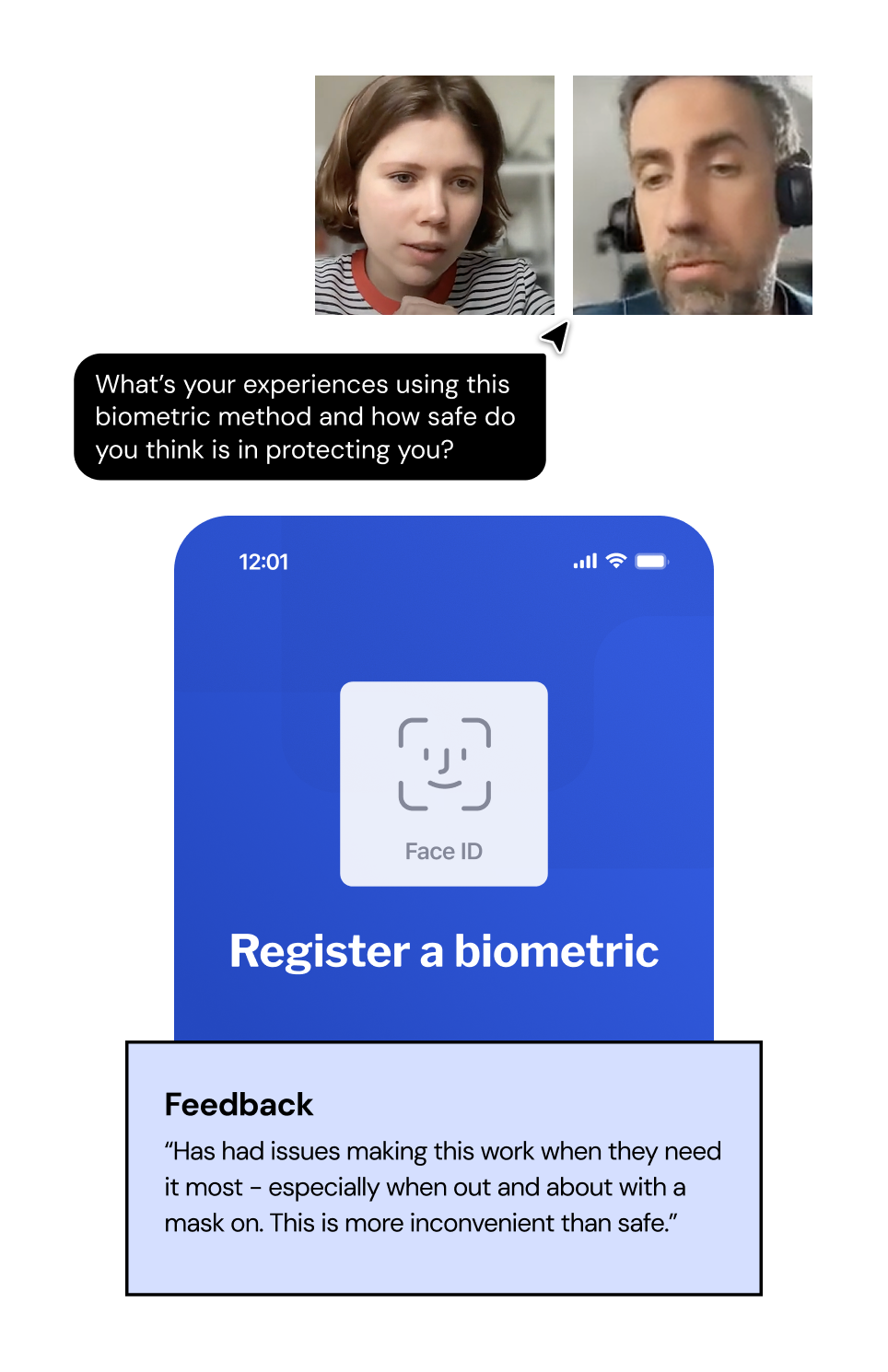
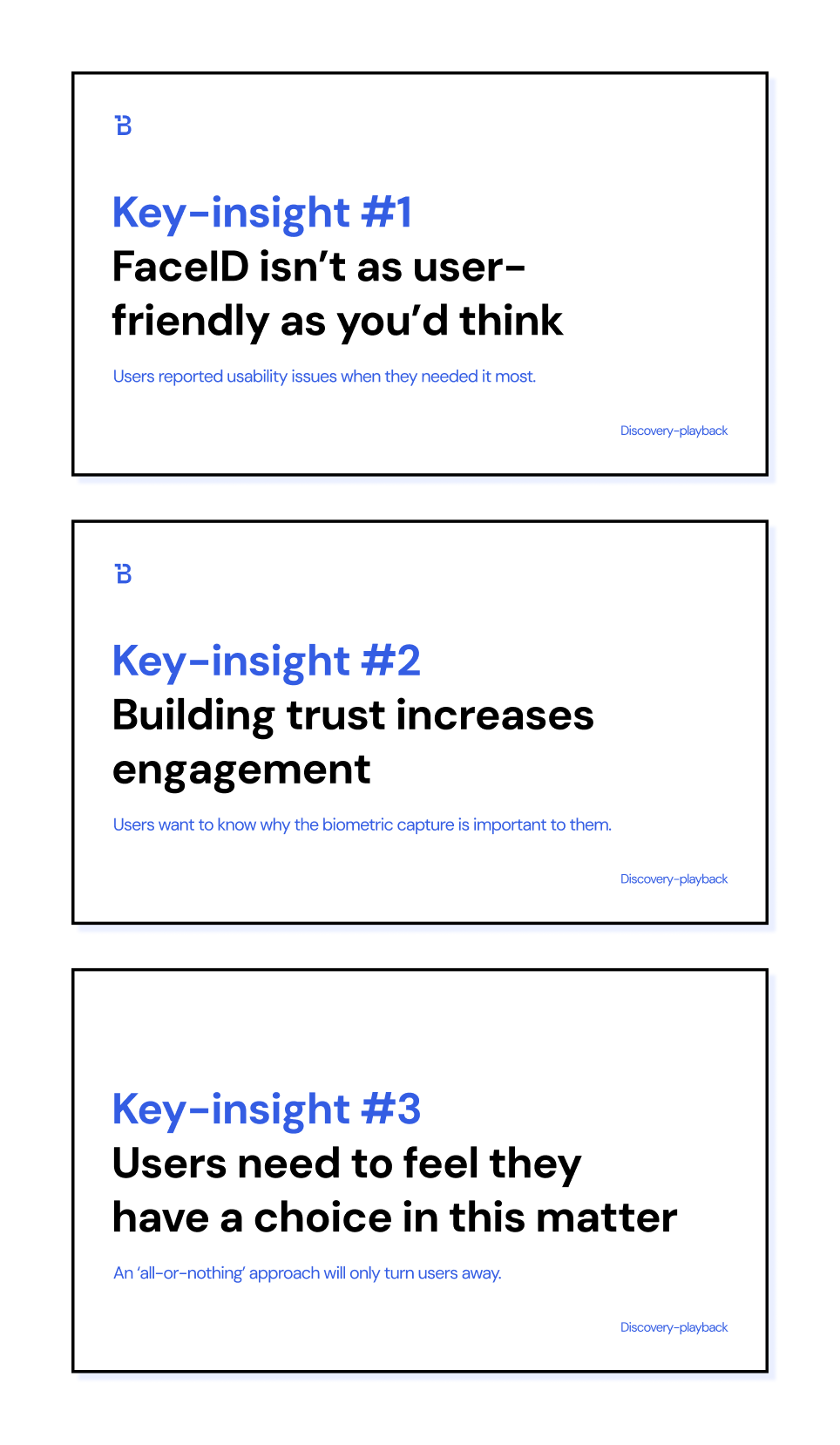
Contextual barriers to FaceID - At the time of research (2021), FaceID faced a significant 'service failure' due to the global prevalence of face masks. Users consistently identified this as a primary friction point, leading to a decreased reliance on—and trust in—facial recognition as a primary authenticator.
Build trust - The automated nature of the inherited SDK created a 'system-led' experience that lacked transparency. By introducing 'intentional friction'—slowing the interaction to allow for contextual processing—we increased the probability of user compliance and strengthened the perception of their personal security.
Refining the linear approach - The inherited SDK enforced a rigid, linear sequence requiring both biometric and passcode enrolment. Research showed this 'all-or-nothing' approach caused significant drop-off among users hesitant to share biometric data.
With the underlying bank security guidelines only mandating a passcode for compliance a non-linear flow would potentially empower users to choose their preferred authentication method without compromising security standards.
Design and collaboration
Providing choice
I explored two logical paths to balance security-compliance with user-autonomy. Collaborating with the development team, I ensured both options were technically viable within the SDK constraints, before creating and testing prototypes with users.
Testing Insights:
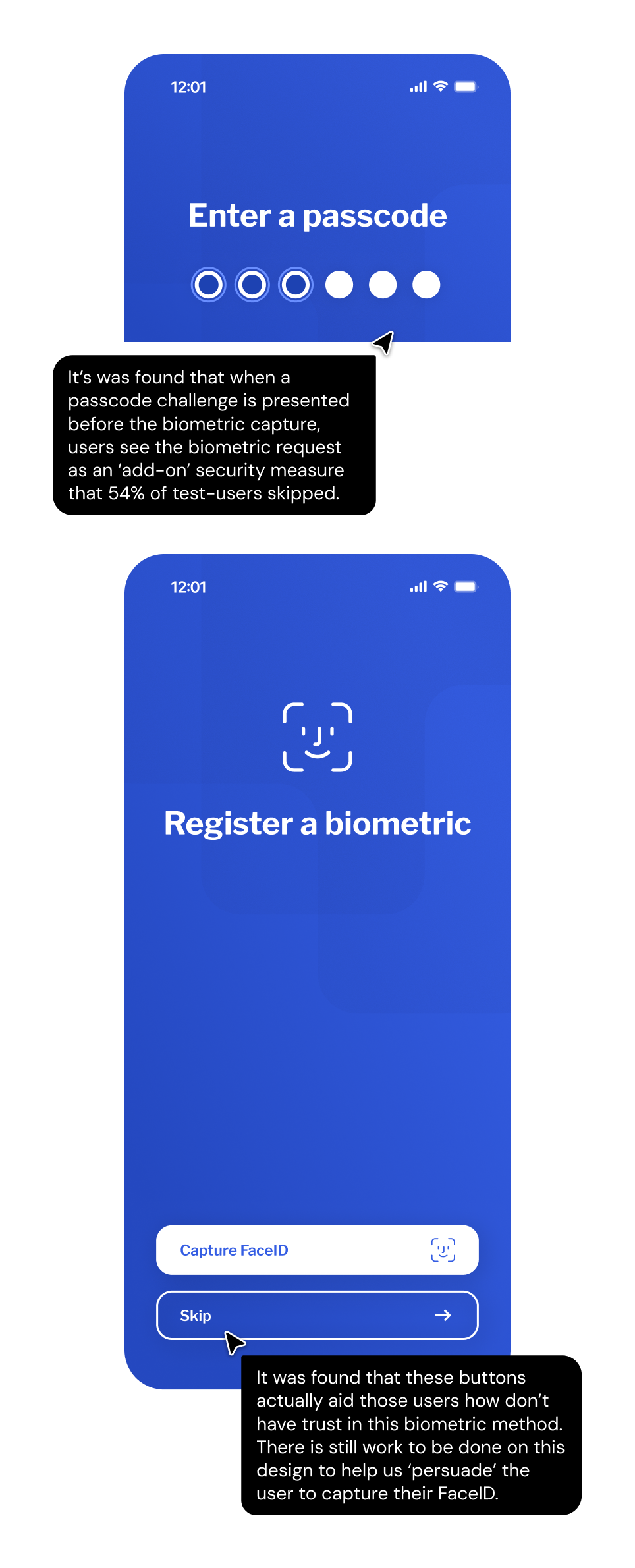
Mandatory Passcode First - This created a mental 'finish line' for users. Once the passcode was set, 54% ignored the biometric prompt, viewing it as a secondary, unnecessary task.
Optional Biometric First - By positioning the biometric capture as the initial interaction—but allowing an immediate 'Skip' to passcode—we achieved better engagement. Providing visual context (via copy) before the challenge was initiated reduced the skip rate to 38%, proving that users are more likely to adopt advanced security measures when the benefits are effectively contextualised and communicated to them.
Strategic foresight
Recognising that user trust is built over time, I mapped a 're-engagement' strategy for users who initially skipped biometric setup. By visualising these entry points within the app experience, I helped the team understand how authentication journeys could enrich experiences beyond this scoped piece of work.
This strategic foresight was particularly valuable as the squad inherited the Account Management domain at a later point to ensure a consistent and integrated user experience across the entire lifecycle.
Delivery
Engineering support
To ensure that the high-level strategy and core interaction patterns were effectively delivered to engineering, I produced production-ready specifications and proactively resolved any low-level edge cases that were discovered during technical stress-testing.
Design system adoption
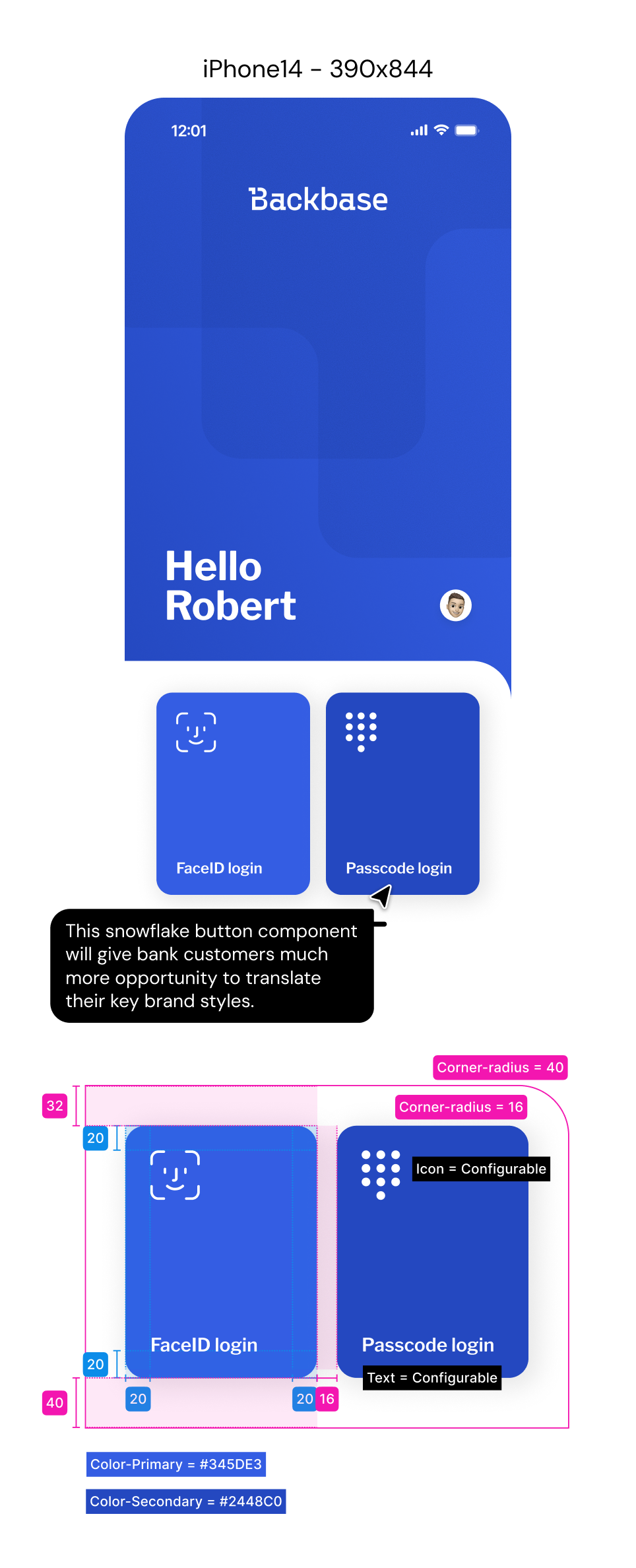
Recognising that the device registration and login journeys were the primary touch-points with the brand, I identified a strategic opportunity to enhance the front-end personalisation capabilities.
By expanding the project scope to include a redesign of the login experience, I could ensure visual parity between the web and mobile channels.
As part of this, I developed a new, highly configurable button component that offered greater brand expression and flexibility than the existing system components could.
Outcomes and reflections
From a product perspective, there were many positives to take-away…
Product sales were successful and helped the value-stream meet and exceed its ARR targets.
The design achieved a 95% adoption-rate on project: with only 5% custom-changes needing to be made.
The flow where users could capture their biometric from inside of the app became a reality when the Account Management domain was adopted and owned by the value stream.
From a personal perspective…
I became a knowledge expert in the iOS and Material guidelines for mobile-native design.
My demonstration of the importance of ‘discovery research activities’ helped secure funding for a full-time researcher within the value-stream.
As the velocity of work increased on mobile, I helped hire and mentor a designer to take-over my web responsibilities.